
Reef forests
True underwater jungles
Reef forests serve as shelter for numerous marine species while helping protect our coastlines from erosion. However, these ecosystems are severely threatened by different fishing practices, pollution, and habitat loss. They are also particularly sensitive to global warming caused by climate change.
Their high sensitivity makes them excellent indicators of the conservation status of marine habitats.
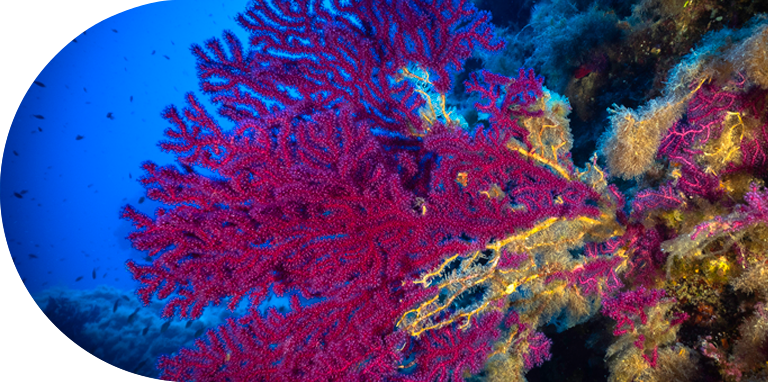
The challenge of conserving them
What environmental conditions does Posidonia need?

Access to sunlight for photosynthesis

Clear, oxygen-rich waters low in nitrates and phosphates, free of waste and pollution

Colonies living on seabeds or sandy substrates, forming reef structures

Stable salinity

Strong dynamism and currents

Highly sensitive to sudden temperature changes
Corals and gorgonians
Coral and gorgonian forests are highly productive ecosystems that play a vital role in the development of numerous species of fish, molluscs, sponges, and crustaceans.
They provide a safe refuge for the reproduction, breeding, and feeding of countless species while helping maintain healthy coastlines, protecting them from erosion, strong currents, and rising sea levels. They also act as natural barriers against hurricanes, cyclones, and severe storms.
Corals are rigid and slow-growing structures; in contrast, gorgonians have flattened, tree-like branches that sway gently in the sea -resembling fans- and grow at a much faster rate.
Both corals and gorgonians belong to the coralline family of cnidarians, composed of tiny polyps. Although they cover only 1% of the ocean floor, at least 25% of all marine species depend on corals and gorgonians at some stage of their life cycle.
In Spain, three main gorgonian species are found: red gorgonian (Paramuricea clavata), white gorgonian (Eunicella singularis), and yellow gorgonian (Eunicella cavolini).
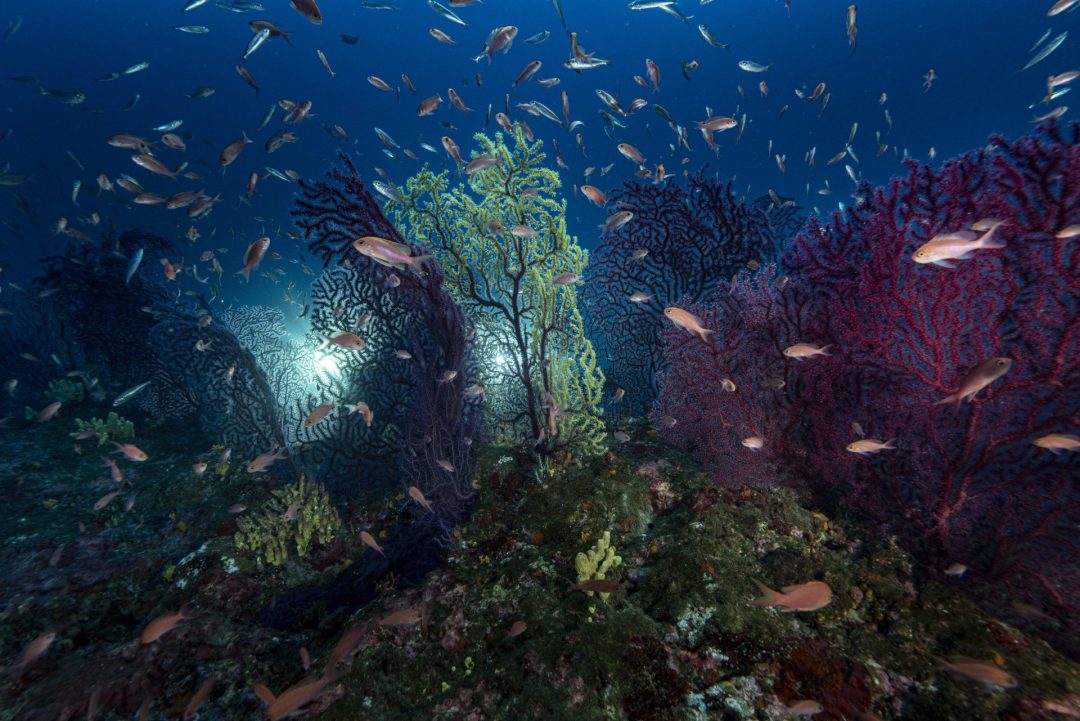
Our actions
Gorgonian forest
Action
Active restoration of gorgonians in the surroundings of the Atlantic Islands National Park using the 'badminton' method -an innovative deep-sea restoration technique developed by the Institute of Marine Sciences (ICM).
Why?
To rescue gorgonians caught accidentally, nurture and recover them, and return them to the ocean.
To raise public awareness about their ecological importance and the valuable ecosystem services they provide.
Project highlights
Engagement of key stakeholders: direct involvement of people with intellectual disabilities to promote social inclusion, as well as participation of the fishing sector as an essential ally in the conservation and restoration of marine habitats.
Scientific methodology: implementation of the restoration method developed by the Institute of Marine Sciences (ICM), part of the Spanish National Research Council (CSIC).
- The Marine Forest grows: Redeia's Marine Forest expands from the Mediterranean to the Atlantic, driven by the same spirit of conserving and restoring high-value marine habitats and ecosystems.
Help us!
What can you do?

Reduce your CO2 emissions.
Use safe sunscreens free from oxybenzone and titanium dioxide, or avoid sunscreen when swimming in ecologically sensitive areas.
Protect water quality.

Recycle and avoid littering.

Participate in marine cleanup and conservation activities.

If you fish or dive, do not touch corals or gorgonians -some are over a million years old, extremely fragile, and can break easily.