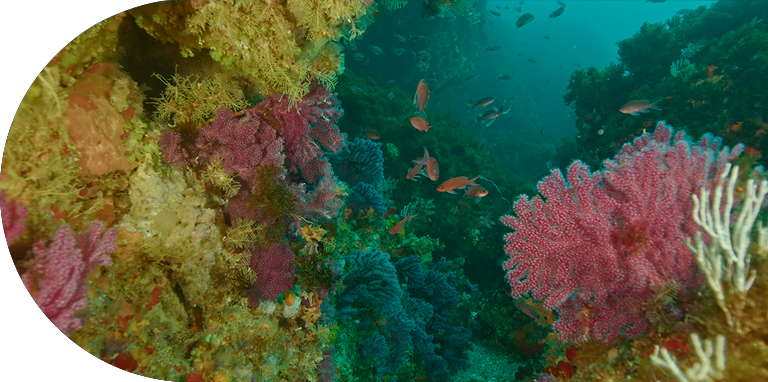
With this initiative, the Marine Forest makes the leap from the Mediterranean to the Atlantic Ocean. This innovative project, which uses the 'Badminton' scientific methodology developed by the ICM-CSIC, is yet another example of Redeia's determination to conserve the sea. .
This action is aligned with the commitment of the platform and of Red Eléctrica's parent company to contributing to ODS 14.
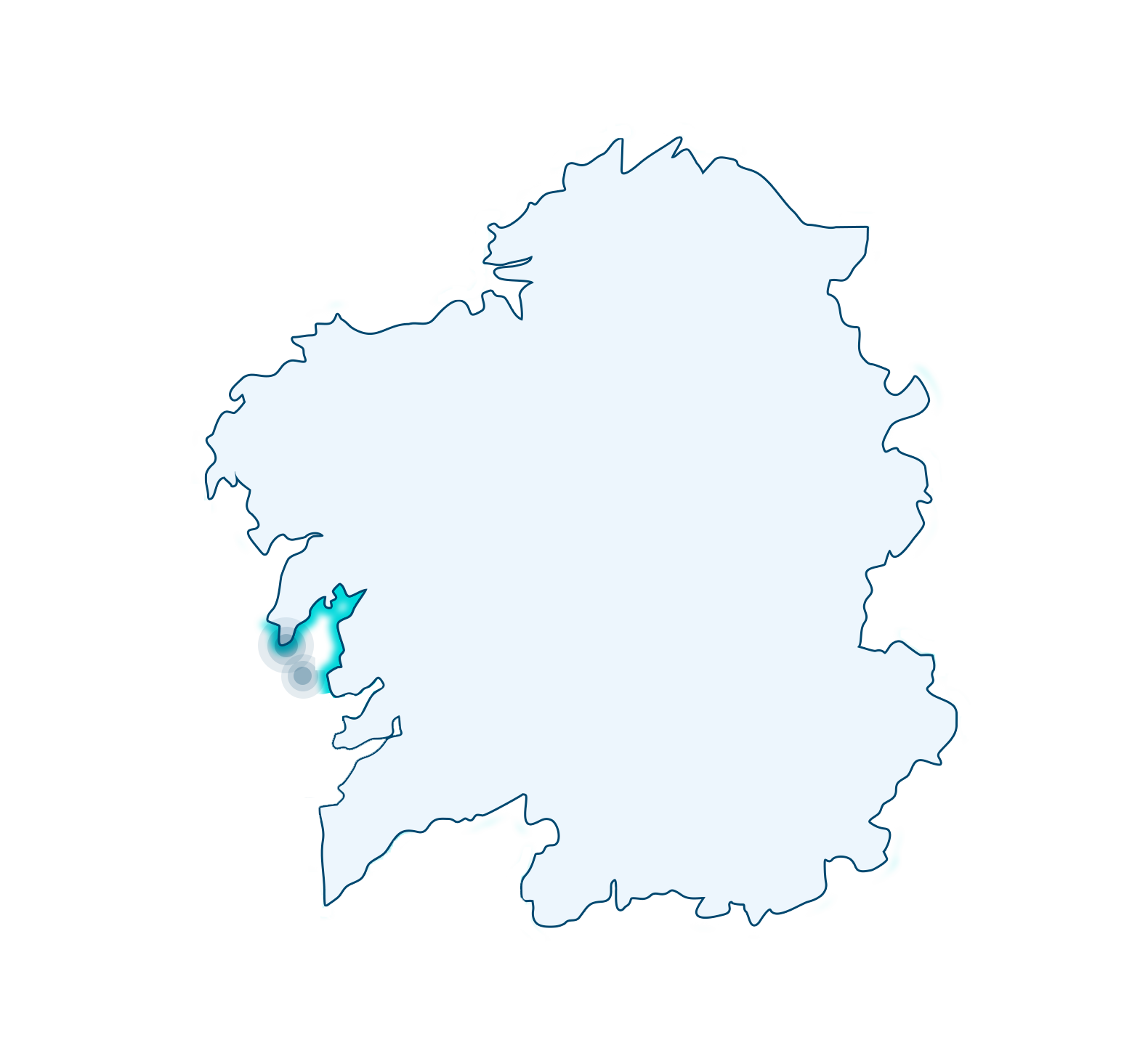
The objective of the initiative is to protect and conserve Galicia's marine biodiversity through active restoration actions. At the same time, the project aims to raise awareness among civil society and contribute to the integration of people with disabilities. That is why the fishing sector – whose activity is affected by the loss of marine habitat – plays a leading role in restoring the ecosystem.
The involvement of fishermen is key to this project, as they are the ones who personally recover the gorgonians they accidentally catch while fishing. Once in port, they deliver them to the Gorgonian Hospital that Amicos has set up in the Ribeira Fish Market, where nurses restore and rear them until they are returned to the sea, next to the Atlantic Islands Maritime-Terrestrial National Park.
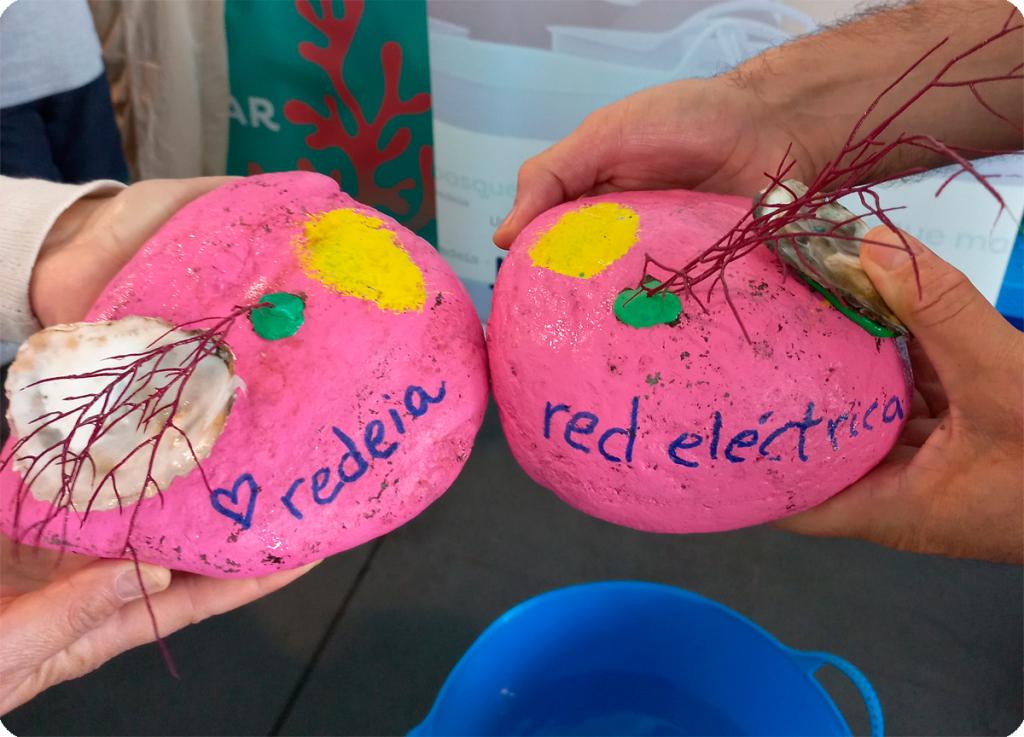
The innovative badminton method consists of attaching the gorgonians to natural stones to act as weights, which allows the colonies to land upright when dropped from a boat.
Gorgonians are slow-growing organisms in deep-sea ecosystems that serve as a shelter, feeding, and breeding ground for a wide diversity of species, many of which are of commercial interest. Consequently, areas with a high density of these species are prime fishing grounds, and therefore suffer greater fishing pressure.
During their activity, gorgonians are frequently caught unintentionally by fishermen, in a volume that accounts for up to 57 per cent of bycatch. This is one of the fundamental causes decimating gorgonian populations, which in turn drastically reduces the stock of commercial fish species, as well as the richness of marine biodiversity.
The project highlights the work of 40 people with intellectual disabilities as fundamental environmental agents in marine conservation.
How do they do it?
- They receive the gorgonians collected by the fishermen
- They care for them in the Ribeira Fish Market hospital for their recovery and growth
- They paint the stones to which the gorgonians are attached using an ecological adhesive
- They return them to the sea for active restoration
- The badminton method
Project objectives
In the media
Galician television has reported on this project in which Redeia and the Amicos Association have joined forces to conserve and recover the gorgonian forests of Galicia.
Expected outcomes

recovered and returned to the sea
of area under improvement
from the Amicos Association
Timeline


Media Gallery


