The platform
A strategic commitment by Redeia
We are driving the preservation and restoration of marine ecosystems. This initiative aligns with the European Union Nature Restoration Law and the global biodiversity and marine conservation goals set by the United Nations and the European Union. This mission is part of Redeia’s biodiversity commitment, which aims to achieve a net positive impact on both terrestrial and marine ecosystems -and on natural capital as a whole- by 2030.
To this end, the Marine Forest is one of Redeia’s flagship projects, developed under its Comprehensive Impact Strategy, and joined by the Ecomar Foundation as the first partner in this ambitious roadmap.

card 1
We promote public-private collaboration to restore the ocean by building alliances.

card 2
We work to restore the largest possible number of marine habitats with high ecological value by 2030.

card 3
We share scientific knowledge and technical expertise with society.
Our purpose
Marine ecosystems are one of the Earth's main reserves of biodiversity. They are home to 250,000 species and provide more than half of the oxygen we breathe, but they face multiple threats. The Bosque Marino platform aims to promote their conservation and restoration until 2030. (Available only in Spanish)
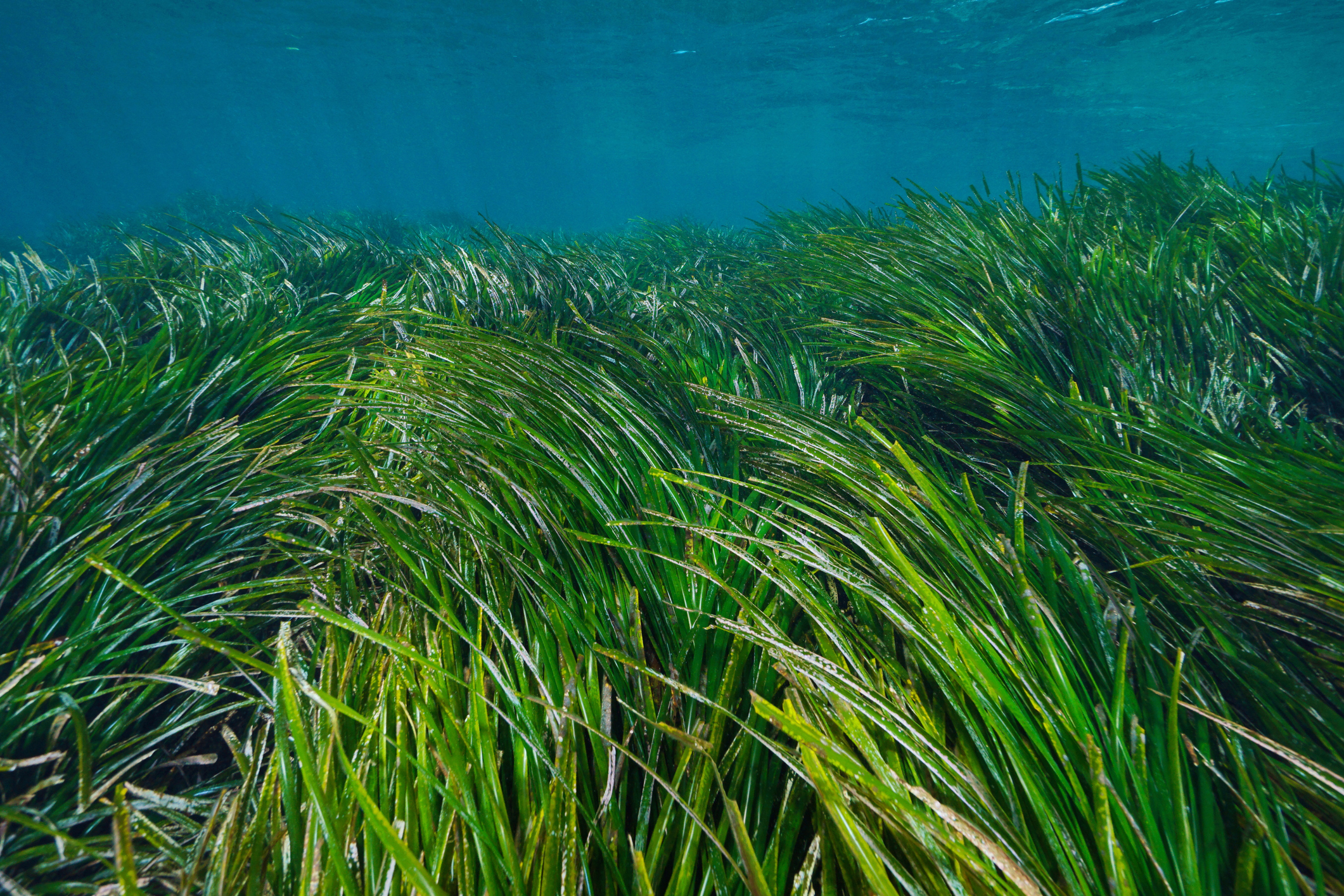
The Marine Forest platform was born from Redeia's awareness and experience regarding the ecological importance of Posidonia oceanica in the Mediterranean.
Its seed was planted through projects carried out in the Balearic Islands (Talamanca and Pollença Bay), developed as part of the submarine interconnection lines commissioned by Red Eléctrica, Redeia’s subsidiary. Through these initiatives, Redeia -together with scientific institutions and public administrations- successfully restored two hectares of degraded seagrass meadows. This achievement marked the largest Posidonia oceanica planting ever conducted in the Mediterranean.
These projects, essential for the archipelago’s electricity supply, deepened Redeia’s understanding of the species’ value to marine ecosystems and the need to protect it.
Motivated by the desire to amplify this positive environmental impact, Redeia took the next step: in 2024, the Ecomar Foundation joined the platform to combine efforts and contribute to the conservation, restoration, and scientific understanding of the oceans.
Together for a living ocean and a sustainable future

Redeia is a global operator of essential infrastructure and a driving force behind the energy transition and universal connectivity. It manages Spain’s electricity system and operates electricity and telecommunications grids in Spain and Latin America, with a strong focus on innovation and sustainability. Its commitment to the regions where it operates leads it to develop infrastructure that ensures maximum environmental integration while striving to generate a positive impact on both the environment and society.

Since 1999, the Ecomar Foundation has been caring for the sea through education, awareness, and actions to build a cleaner, healthier future for our planet. It invites everyone to be part of the solution by repairing the damage done to marine ecosystems. It was founded by Theresa Zabell, the only Spanish woman with two Olympic gold medals, who decided on retirement from competitive sailing that she would give back to the sea a small part of what it had given her.

The Mediterranean Institute for Advanced Studies (IMEDEA) is a joint research centre of the Spanish National Research Council (CSIC) and the University of the Balearic Islands (UIB). Its mission is to transfer scientific knowledge to society, particularly regarding marine, coastal, and island ecosystems. This institution also wants to increase our awareness of environmental processes that affect our planet. IMEDEA brings together experts from diverse disciplines to foster a collaborative research environment.