
Posidonia oceanica
Discover the underwater forests of a unique plant
The jewel of the Mediterranean
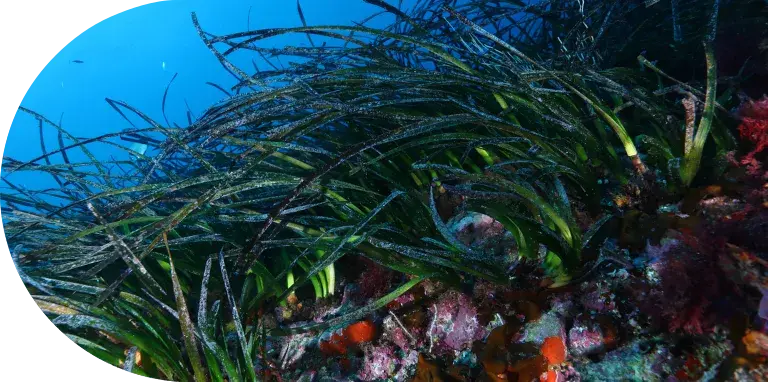
Posidonia oceanica is one of the sixty known species of seagrass (marine phanerogams) adapted to the underwater environment. It is a perennial plant that completes its entire life cycle underwater —it produces flowers, fruits, and seeds, unlike algae.
Posidonia grows only in the Mediterranean, forming meadows at depths ranging from 0 to 45 meters. Its long, ribbon-like leaves perform photosynthesis, while its network of roots, rhizomes, and sediments beneath the meadows can reach several meters thick.
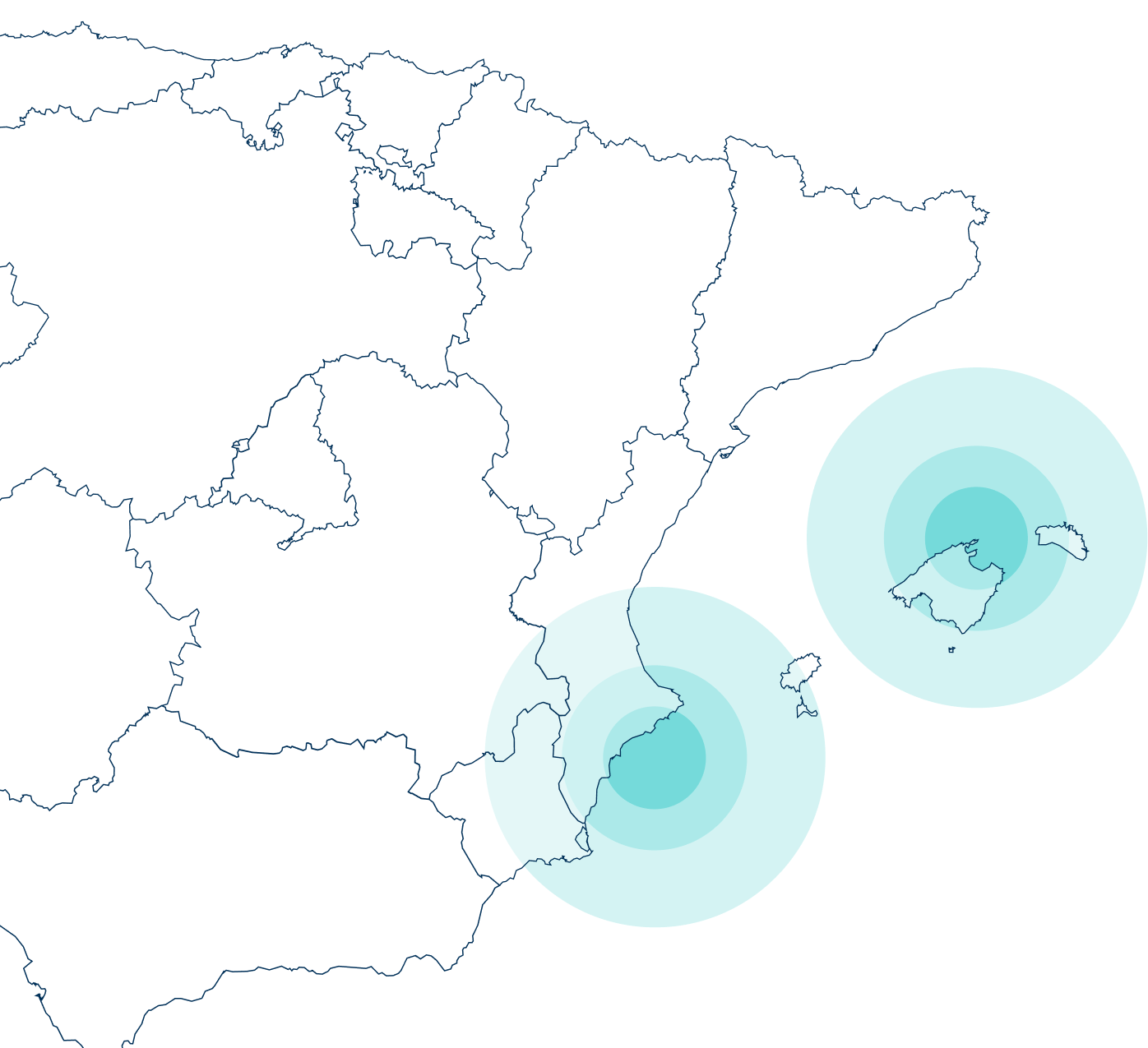
In Spain, Posidonia oceanica meadows cover an estimated 1,150 km2.
633 km2 are located in the Balearic Islands. The largest areas are found around Mallorca and the Pityusic Islands (Ibiza and Formentera —World Heritage sites), with the remainder around Menorca.
However, these meadows have experienced an average decline of 10% in recent years, reaching up to 44% in some areas. The reduction of Posidonia meadows in Spain is estimated to be 30%.
Did you know...?
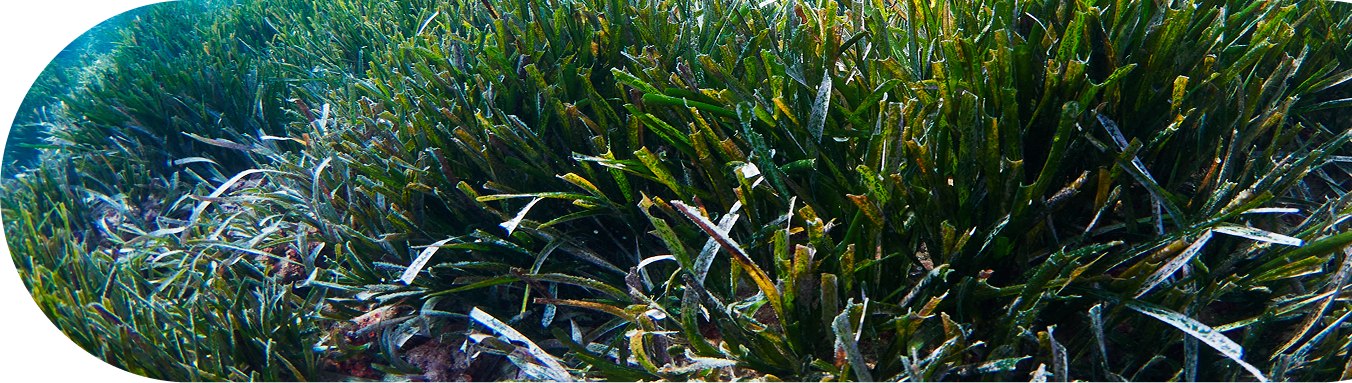
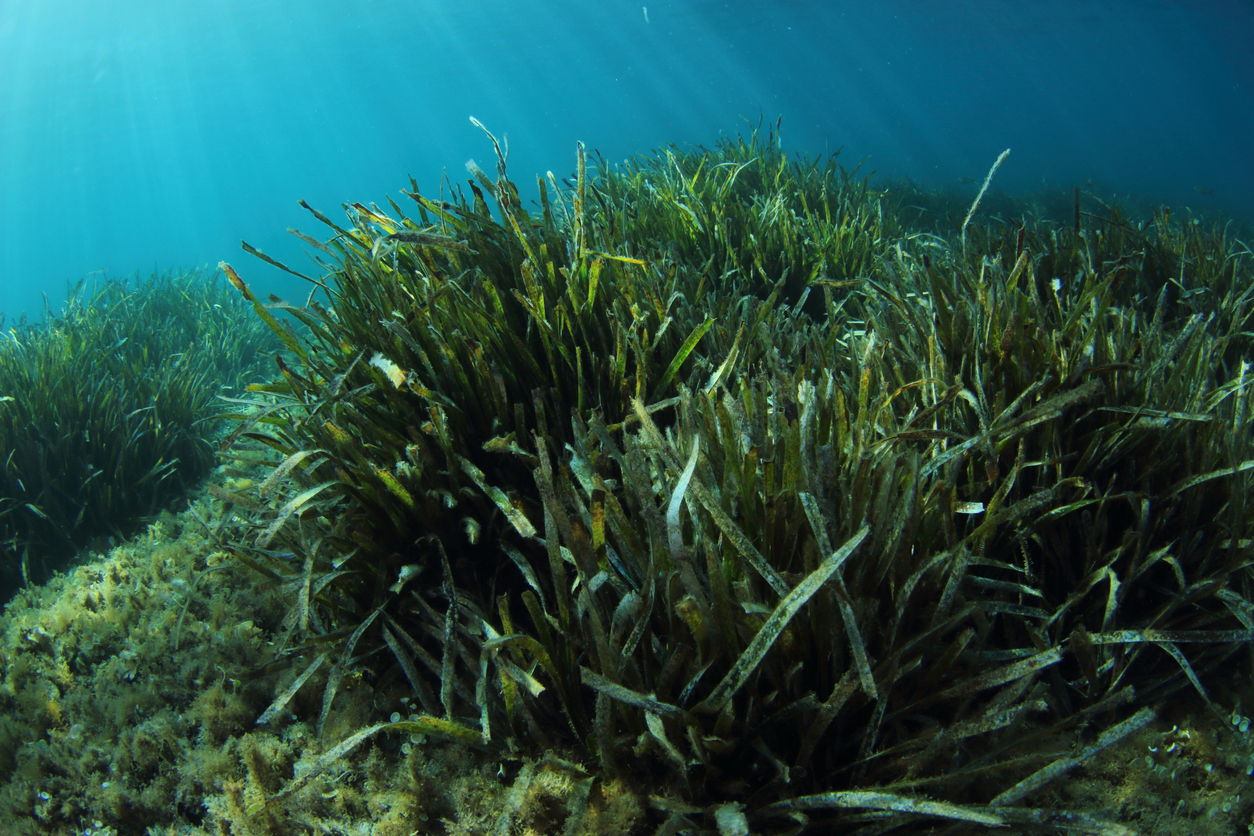
Posidonia oceanica is an ecosystem engineer that creates miniature underwater forests, or meadows, which serve as a habitat for countless marine species.
A hidden treasure
Posidonia meadows provide vital benefits for marine ecosystems, coastlines, and human life —known as ecosystem services.
Beyond fisheries, Posidonia residues found on the coast have traditionally been used by farmers, livestock breeders, traders, and even in home construction.
These meadows support marine life and water transparency, reduce waves and coastal erosion, produce sand, and act as carbon sinks.
Posidonia meadows offer intangible services tied to leisure, education, research, and artistic and ethical inspiration.
Posidonia meadows release large amounts of oxygen and serve as natural sinks of organic carbon —known as blue carbon.
Hundreds of species live, feed, reproduce, and find shelter from predators within Posidonia meadows.
Their function is essential to safeguard beaches and dune systems by reducing wave energy and cushioning coastal impact.
Posidonia contributes to the clarity of the sea thanks to its powerful filtering capacity. That's why it's responsible for the turquoise-blue waters characteristic of the Balearic Islands and other parts of the Mediterranean.
The challenge of conservation
What environmental conditions does Posidonia need?

Availability of light and clear waters

Stable salinity levels (it is sensitive to variations)

Suitable rocky or sandy substrate for anchoring

Water temperatures between 10 °C and 28 °C

Well-oxygenated, clean, unpolluted waters

Coastal areas with low hydrodynamic activity
How does Posidonia grow?
Posidonia grows and branches very slowly. When older parts die and decompose, the rhizomes that were once connected become separated, forming clones.
This process, known as clonal growth, involves vegetative fragmentation and is a form of asexual reproduction.
Posidonia grows only 1-6 cm per year, meaning it takes centuries to cover just a few square meters and millennia to form a large meadow.
Help us!
What can you do?

If you use a boat, anchor only over sandy areas or use designated mooring fields.
Good anchoring practices guide (only available in Spanish)

Don't discharge bilge water over seagrass meadows or coastal areas where water circulation is low.

If you're an aquarist who keeps exotic species, never pour aquarium wastewater down the toilet.

As a citizen, demand that public authorities uphold their commitments to environmental quality and protection.

Spread the word -explain the importance and value of Posidonia oceanica to your children, family, friends, and acquaintances.

Observe the meadows when you swim and enjoy them! We protect best what we know and love.
Our experience
Seagrass meadow forest
Our actions
Recovery of two hectares of seagrass through the
planting of Posidonia oceanica fragments in
Pollença Bay (Mallorca).
Goals
To promote the conservation of biological diversity;
to foster research, development, and the use of new
technologies and processes; and to strengthen our commitment
to combating climate change.
Project highlights
A pioneering project. The first large-scale Posidonia oceanica fragment planting initiative in the Mediterranean.
Innovation. Cultivation of naturally fragmented shoots for replanting in degraded areas.
Scientific rigour. In collaboration with the Mediterranean Institute for Advanced Studies of the Spanish National Research Council (IMEDEA–UIB–CSIC).
A living laboratory. Open to the scientific community, education, and environmental outreach.
Public–private partnership. With the participation of the Balearic Islands’ Regional Ministry of Environment, Agriculture and Fisheries, IMEDEA–UIB–CSIC, and the Pollença Air Force Base.
Commitment to the planet.